Spinal Cord Stimulation (SCS) in Patna
World-class bio-electric neuromodulation implant for intractable Failed Back Surgery Syndrome (FBSS), CRPS, and severe nerve pain with a 5-day trial period before permanent placement.
Bio-Electric "Pacemaker for Pain"
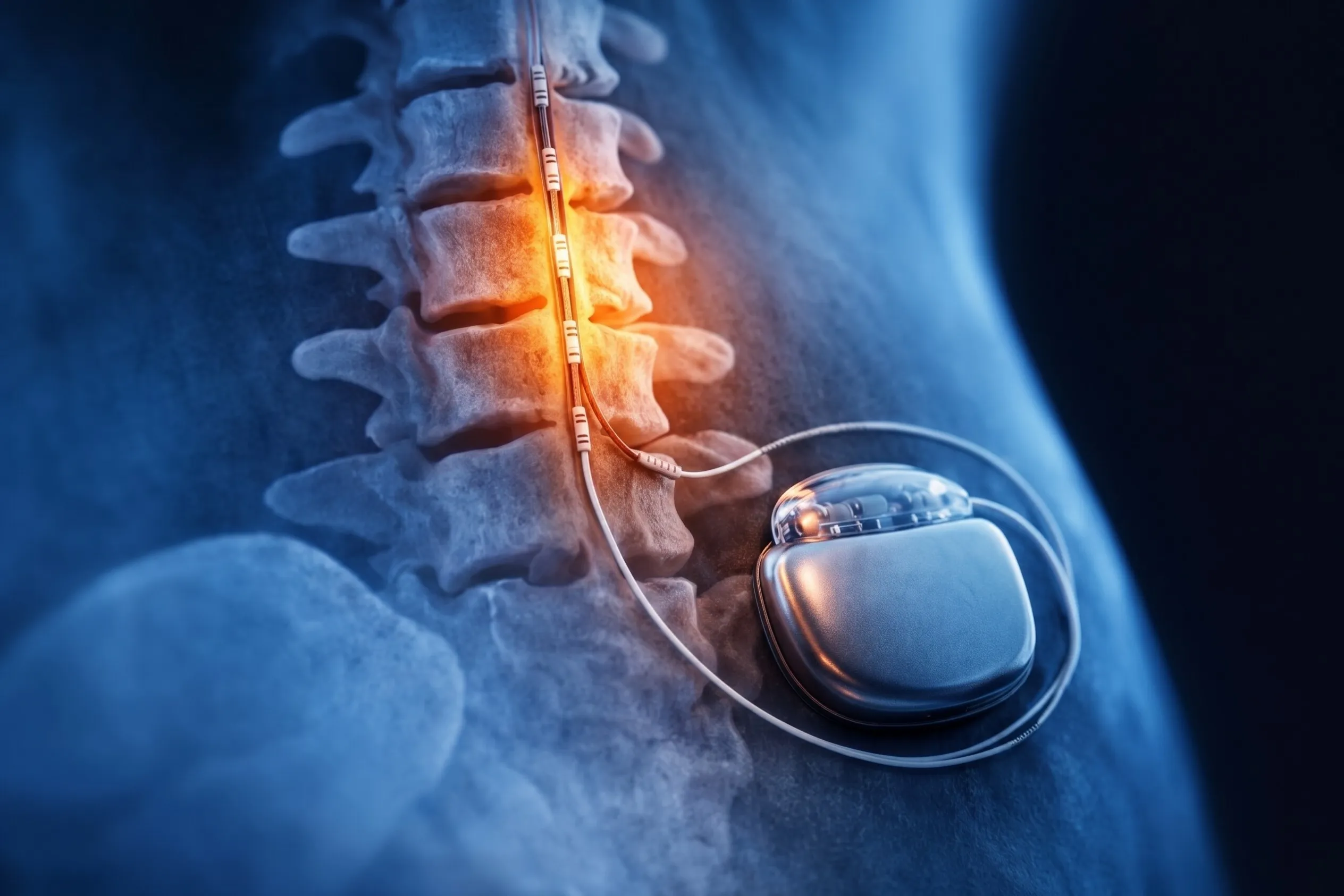
Spinal Cord Stimulation (SCS) is the pinnacle of modern interventional neuromodulation. Often referred to as a "pacemaker for pain," SCS uses miniaturized medical electronics to deliver mild electrical pulses directly to the dorsal columns of the spinal cord.
In conditions such as Failed Back Surgery Syndrome (FBSS) and Complex Regional Pain Syndrome (CRPS), damaged nerves continuously send false distress signals to the brain. SCS intercepts these pain signals at the spinal cord level, replacing agony with soothing tingling sensations (paresthesia) or running on advanced sub-perception frequencies (BurstDR / HF10) that eliminate pain completely silently.
Unlike irreversible spine fusion surgeries, SCS features a 5 to 7-Day In-Home Trial. Dr. Shrutika Bhagat places temporary micro-leads in the epidural space under C-Arm guidance. The patient experiences pain relief during their normal daily life at home. Only when ≥50% to 80% sustained relief is proven is the permanent rechargeable pulse generator implanted under the skin.
Who is a Candidate for Spinal Cord Stimulation?
Indicated for patients with intractable chronic nerve pain where all other medical and surgical therapies have failed.
Failed Back Surgery Syndrome (FBSS)
Persistent or worsening back and leg pain after laminectomy, discectomy, or spinal fusion hardware where repeat surgery offers low benefit.
Complex Regional Pain Syndrome (CRPS)
Severe burning limb pain, hypersensitivity (allodynia), skin temperature changes, and swelling following an arm or leg trauma/fracture.
Refractory Diabetic Neuropathy
Severe burning, freezing, electric shocks in both feet and lower legs unresponsive to maximum gabapentin, pregabalin, or duloxetine.
Peripheral Vascular Disease (PVD)
Severe rest pain in legs and ischemic non-healing ulcers where vascular bypass or stenting is no longer technically feasible.
Post-Herpetic Neuralgia & Phantom Pain
Agonizing persistent shingles nerve pain or phantom limb pain after amputation dramatically soothed via dorsal column stimulation.
Intractable Opioid Dependency
Patients trapped on dangerous escalating doses of morphine, tramadol, or fentanyl seeking an implantable drug-free alternative.
SCS Neuromodulation vs. Revision Open Spine Surgery
| Clinical Parameter | Spinal Cord Stimulation (SCS) | Revision Open Spine Surgery |
|---|---|---|
| Predictability | 100% Guaranteed 5-Day Trial before permanent commitment | No trial; outcome unknown until after invasive surgery |
| Reversibility | 100% Reversible; system can be removed at any time | Irreversible anatomical bone resection & fusion |
| Success in FBSS | 75% to 85% long-term pain reduction (Level 1 Evidence) | 12% to 30% success in repeat re-operations |
| Invasiveness | Pinhole lead insertion + small battery pocket under local anesthesia | Extensive open tissue dissection, bone drilling, metal screws |
| Drug Reduction | Significant reduction or complete cessation of opioid painkillers | Often requires prolonged post-operative narcotics |
Two-Stage SCS Patient Journey
Comprehensive Candidate Screening
Dr. Shrutika Bhagat evaluates spine MRI, past surgeries, and pain topography to configure the optimal stimulation program.
Stage 1: Pinhole Trial Lead Placement
Under local anesthesia and live C-Arm X-ray, fine temporary leads are navigated into the thoracic epidural space (T8–T10).
5 to 7-Day In-Home Trial
Connected to an external controller, the patient tests pain reduction, walking ability, and sleep quality at home.
Trial Success Confirmation
When ≥50% to 80% sustained pain relief and improved functional mobility are confirmed, the patient proceeds to permanent implant.
Stage 2: Permanent Battery Placement
Permanent medical leads and a miniature rechargeable pulse generator (IPG) are placed completely under the skin.
Smartphone Remote Calibration
The patient controls their stimulation intensity wirelessly using a secure smartphone remote, enjoying long-term pain freedom.
Advanced Neuromodulation Waveforms in Patna
BurstDR Neuromodulation
Mimics natural brain firing patterns to provide complete pain relief without tingling sensations (paresthesia-free).
High-Frequency 10 kHz
10,000 Hz electrical pulses that selectively silence dorsal horn interneurons without paresthesia.
Differential Multiplexed
Modulates both neural pathways and glial cell inflammatory responses in chronic intractable back pain.
Dorsal Root Ganglion SCS
Specialized lead placement over the DRG for focal CRPS, groin pain, phantom limb, and foot neuropathy.
Common Questions on Spinal Cord Stimulation
Why Choose Dr. Shrutika for Spinal Cord Stimulation in Patna
- Try Before You Decide (Trial Phase): A 5–7 day temporary trial lets you test 50–80%+ pain reduction before committing to a permanent implant.
- Advanced High-Frequency & Burst Waveforms: Paresthesia-free stimulation technology replaces painful nerve burning with natural pain-free sensations.
- Precision Epidural Lead Placement: Live fluoroscopy mapping ensures electrodes directly overlap your specific dermatomal pain distribution.
- Restores Quality of Life & Sleep: Dramatically cuts opioid requirements and helps chronic pain sufferers reclaim active daily routines.
- Effective for CRPS, Neuropathy & FBSS: The ultimate treatment for intractable neuropathic leg pain, failed back surgery, and diabetic neuropathy.
- Comprehensive Neuromodulation Centre: Dedicated post-implant programming support and expert physician oversight.
Don't Let Chronic Pain Control Your Life.
Take the first step toward understanding your pain and exploring modern, evidence-based minimally invasive relief with Dr. Shrutika Bhagat.