
Trigeminal Ganglion RFA in Patna
Precision C-Arm guided percutaneous radiofrequency rhizotomy for instant, lasting freedom from electric shock Trigeminal Neuralgia pain without open brain surgery.
Instant Non-Surgical Cure for "Suicide Disease" Facial Pain
Trigeminal Ganglion Radiofrequency Ablation (RFA) (also known as Percutaneous Gasserian Rhizotomy via Hartel's Technique) is the gold-standard minimally invasive interventional procedure for curing refractory Trigeminal Neuralgia.
Trigeminal Neuralgia is widely termed "the world's most painful condition," producing sudden, violent, high-voltage electric shocks across the cheek, jaw, lips, gums, and teeth triggered by everyday actions like talking, chewing, brushing, or light facial touch. Over time, high doses of anti-epileptic medications (Carbamazepine/Tegretol) cause toxic drowsiness, liver stress, and memory fog while losing their pain-stopping effect.
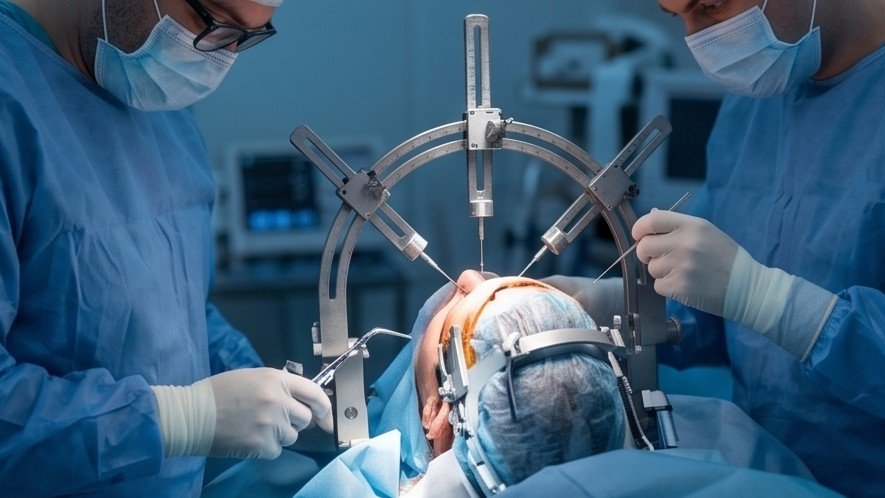
Under live high-resolution C-Arm Fluoroscopic X-Ray guidance, Dr. Shrutika Bhagat introduces an ultra-fine insulated needle through a pinhole in the cheek into the Foramen Ovale at the skull base. Micro-electric stimulation confirms the exact affected branch (V2 Maxillary or V3 Mandibular) with millimeter precision. Controlled thermal energy (65°C to 75°C) selectively coagulates the hyperactive pain-carrying A-delta and C fibers, providing immediate cessation of electric shocks right on the procedure table without opening the skull.
Who is a Candidate for Trigeminal Ganglion RFA?
Indicated for patients suffering from classic or secondary Trigeminal Neuralgia where medications are failing or intolerable.
Classic Trigeminal Neuralgia (TN Type 1)
Lancinating, unilateral electric shocks triggered by chewing, talking, brushing teeth, washing face, or even a light gust of wind.
Carbamazepine / Tegretol Side Effects
Severe dizziness, drowsiness, ataxia, liver enzyme elevation, low sodium (hyponatremia), or allergic drug rash from pills.
High Risk for Open Brain Surgery (MVD)
Elderly patients, cardiac patients, or those with comorbidities who cannot safely undergo open retrosigmoid craniotomy.
Recurrent Pain After Previous MVD / Surgery
Patients who suffered pain recurrence years after microvascular decompression, cured permanently through percutaneous RFA.
Post-Dental Unexplained Facial Pain
Severe shock-like pain triggered in the jaw or upper gums persisting even after multiple unnecessary root canals and tooth extractions.
Advanced Craniofacial Malignancies
Severe intractable facial pain from skull base, nasopharyngeal, or parotid tumors relieved through neurolytic Gasserian ablation.
Percutaneous Trigeminal RFA vs. Open Brain MVD Surgery
| Clinical Parameter | Percutaneous Trigeminal RFA (Dr. Shrutika) | Open Brain MVD Surgery (Craniotomy) |
|---|---|---|
| Invasiveness | 1 mm cheek needle puncture (Zero stitches) | Open skull hole behind ear (Craniotomy & brain retraction) |
| Anesthesia | Local Anesthesia + Mild Twilight Sedation | Full General Anesthesia with endotracheal tube |
| Procedure Duration | 20 to 30 minutes | 3 to 5 hours neurosurgery |
| Hospital Stay | Daycare: Home on the exact same day | 5 to 8 days in ICU & neuro ward |
| Major Complication Risk | Virtually zero risk of brain injury or CSF leak | Risk of stroke, hearing loss, meningitis, CSF leakage |
How Trigeminal Ganglion RFA is Performed
Submental C-Arm Trajectory
The C-Arm fluoroscope is angled in submental-oblique view to project the skull base Foramen Ovale with crystal clarity.
Cheek Pinhole Local Numbing
Hartel's trajectory point 2.5 cm lateral to the oral corner is gently numbed. The patient rests in twilight comfort.
Foramen Ovale Cannulation
A specialized insulated RF needle is guided through the foramen ovale into Meckel's cave where the Gasserian ganglion lies.
Sensory Concordance Testing
Low voltage micro-stimulation reproduces the patient's typical shock in V2 or V3 to confirm 100% accurate target location.
Controlled Thermal Lesioning
Radiofrequency thermal energy (65°C–75°C for 60 seconds) deactivates the hyperactive pain fibers while preserving touch sensation.
Immediate Pain Cure & Home
The patient eats, talks, and touches the face on the table with zero electric shocks. Discharged home in 2 hours.
Trigeminal Neuralgia Modalities in Patna
Thermal Gasserian RFA
Hartel's foramen ovale approach providing instantaneous and permanent shock cessation for V2 and V3 neuralgia.
Pulsed RF (V1 Ophthalmic)
Non-thermal electromagnetic modulation specifically preserving the corneal reflex in upper forehead V1 pain.
Infraorbital / Mental Branch RFA
Targeted extra-cranial neurotomy for isolated lip, jaw, or cheek focal trigger points under ultrasound.
Percutaneous Compression
Micro-balloon mechanical ganglion compression for patients with complex multi-division involvement.
Common Questions on Trigeminal Ganglion RFA
Why Choose Dr. Shrutika for Trigeminal Ganglion RFA in Patna
- Expertise in Cranial Base Access: Advanced fellowship expertise navigating the Foramen Ovale to the Gasserian ganglion with millimeter precision.
- Immediate Electric Shock Pain Elimination: Terminates the unbearable lightning-like cheek, jaw, and eye pain triggered by chewing, talking, or washing the face.
- Avoids Open Brain Surgery (MVD): Per-cutaneous keyhole needle approach eliminates the risks of craniotomy and open neurosurgery.
- Stitchless Daycare Protocol: Conducted under short sedation with electrophysiological testing; discharge within a few hours.
- Stops High-Dose Medication Side Effects: Frees patients from dizzying doses of carbamazepine, gabapentin, and sedating anticonvulsants.
- Recognized Subspecialty Expert: Dedicated pain physician with specialized training in complex cranial and facial neuralgia management.


Don't Let Chronic Pain Control Your Life.
Take the first step toward understanding your pain and exploring modern, evidence-based minimally invasive relief with Dr. Shrutika Bhagat.