

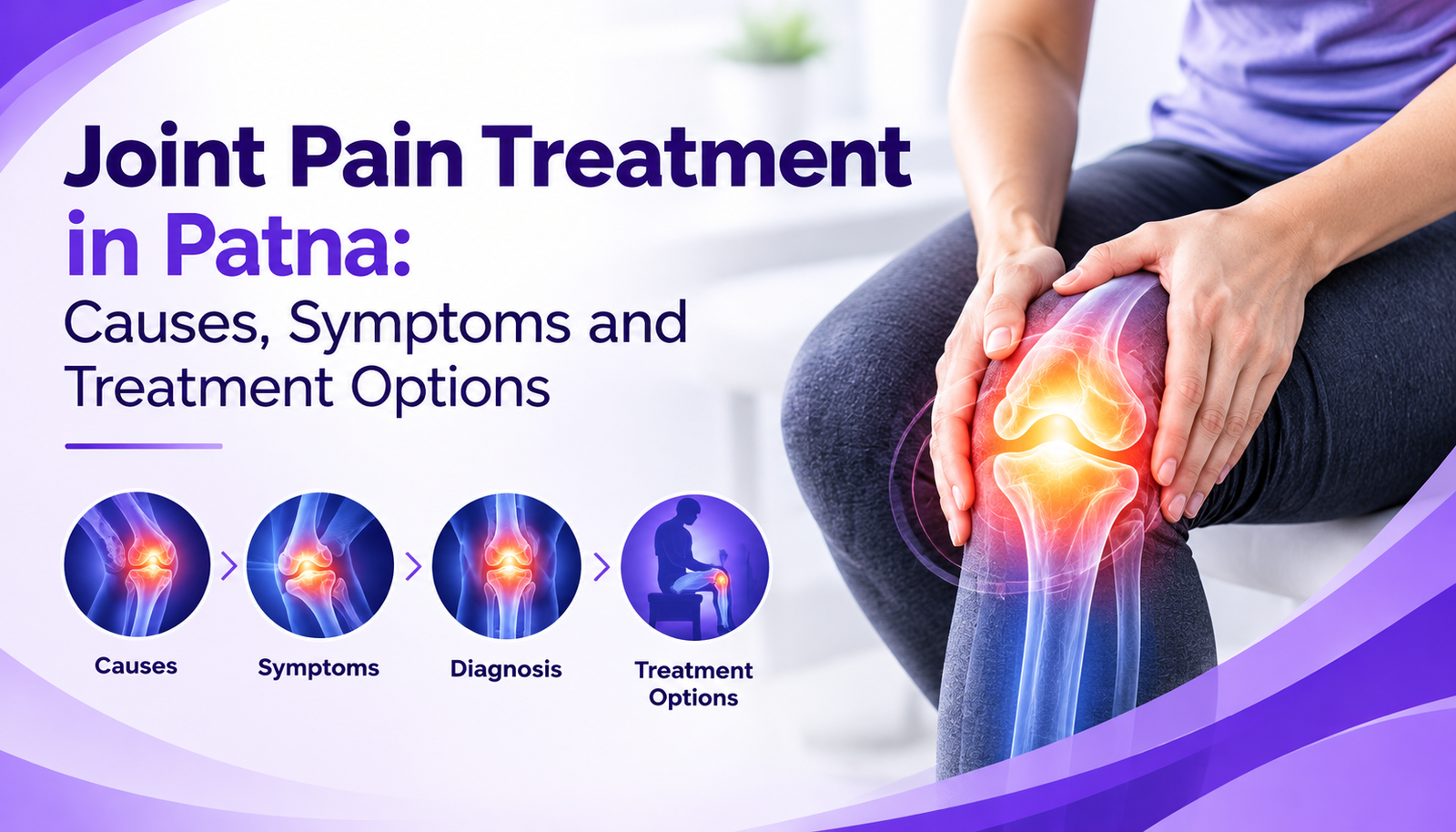
Joint pain can affect your knees, shoulders, hips, wrists and other joints, making everyday activities difficult. It may result from arthritis, injuries, inflammation or overuse. Understanding the underlying cause is essential for choosing the right treatment. If you are looking for joint pain treatment in Patna, learning about the symptoms and available pain management options can help you make informed decisions about your health.

What Is Joint Pain?
Joint pain refers to discomfort, aching or soreness in the areas where bones meet. It can affect one joint or several joints at the same time. Some people experience pain only during movement, while others notice stiffness or discomfort even at rest.
Symptoms can vary depending on the cause, duration and severity of the condition. Persistent pain, swelling or restricted movement should be evaluated by a healthcare professional.
Common Causes of Joint Pain
Several conditions can contribute to joint pain. Common causes include:
- Osteoarthritis: Changes in joint cartilage that may lead to pain, stiffness and reduced mobility.
- Rheumatoid arthritis: An autoimmune condition that causes inflammation in joints.
- Joint injuries: Sprains, strains and other injuries caused by falls, accidents or sports.
- Bursitis: Inflammation of small fluid-filled sacs that cushion joints.
- Tendinitis: Irritation or inflammation of a tendon around a joint.
- Gout: A form of inflammatory arthritis associated with uric acid crystal deposits.
- Overuse: Repetitive movements or excessive physical activity that place stress on joints.
Learn more about the causes and symptoms of joint pain from the NHS joint pain guide.
Symptoms of Joint Pain
Joint pain may present with one or more of the following symptoms:
- Pain during movement or while resting.
- Swelling or tenderness around the affected joint.
- Stiffness, especially after waking up or sitting for long periods.
- Reduced flexibility and range of motion.
- Difficulty walking, climbing stairs or performing daily activities.
- Warmth or redness around the joint.
The pattern of symptoms can help a healthcare professional determine which investigations or treatments may be appropriate.
How Is Joint Pain Diagnosed?
Proper diagnosis is an important step in joint pain management. Your doctor may ask about your symptoms, medical history, previous injuries and daily activities before examining the affected joint.
Depending on the suspected cause, the evaluation may include:
- Physical examination of the joint and its movement.
- X-rays or other imaging investigations when indicated.
- Blood tests if an inflammatory or metabolic condition is suspected.
- Additional investigations when an infection or another specific condition needs to be ruled out.
Not every patient requires every test. Investigations are selected according to individual clinical findings.
Joint Pain Treatment Options in Patna
Treatment depends on the underlying condition, the severity of symptoms and the patient's overall health. A personalised plan may include one or more of the following approaches.
1. Medication
Depending on the diagnosis, a healthcare professional may recommend medication to manage pain or inflammation. The choice of medicine should take into account existing medical conditions, other medications and possible side effects.
2. Physiotherapy and Exercise
Appropriate physiotherapy and guided exercises can help improve joint flexibility, muscle strength and mobility. Exercise plans should be adapted to the affected joint and the individual's symptoms.

3. Lifestyle Modifications
Maintaining a healthy weight, eating a balanced diet and staying physically active within your limits may help support joint health. Avoid activities that repeatedly aggravate your symptoms, but do not stop all movement unless advised by your healthcare professional.
4. Interventional Pain Management
For selected patients with persistent joint pain, a pain specialist may consider targeted procedures after clinical assessment. Depending on the condition, these may include image-guided joint injections or radiofrequency procedures for specific sources of chronic pain.
These treatments are not appropriate for every type of joint pain. Their potential benefits, risks and alternatives should be discussed with the treating specialist.
Explore the available pain management treatments and procedures to learn more about specialist care.
5. Treatment of the Underlying Condition
Some joint conditions require specific treatment beyond symptom relief. For example, inflammatory arthritis may require specialist medical management, while a joint infection needs urgent treatment. The treatment plan should address the underlying cause whenever possible.
For additional patient information, visit MedlinePlus: Joint Pain.
When Should You Consult a Doctor?
Consider medical evaluation if joint pain persists, repeatedly returns, worsens over time or interferes with your sleep, work or daily activities.
Seek urgent medical attention if a joint suddenly becomes severely painful, hot or swollen, particularly if you also have a fever or feel unwell. These symptoms may indicate a joint infection or another condition requiring prompt treatment.
Joint Pain Treatment in Patna with Dr. Shrutika Bhagat
Dr. Shrutika Bhagat is a Pain Medicine and Spine Endoscopy Specialist in Patna. Her clinical focus includes chronic pain management, spine-related conditions and selected musculoskeletal pain disorders.
The appropriate treatment for joint pain depends on an accurate diagnosis and individual clinical assessment. Consultation can help determine whether specialist pain management is suitable for your condition.
To learn more about the clinic, visit the doctor's profile or use the contact page to enquire about consultation availability.
Frequently Asked Questions
What is the most common cause of joint pain?
Joint pain can result from osteoarthritis, injuries, inflammation, tendon problems, gout or overuse. The most likely cause depends on the affected joint, symptoms and medical history.
Can joint pain be treated without surgery?
Many joint conditions can be managed without surgery through appropriate medication, physiotherapy, lifestyle changes and selected pain management procedures. Treatment depends on the diagnosis.
When should I see a doctor for joint pain?
Consult a healthcare professional if pain persists, worsens or affects daily activities. A hot, swollen joint accompanied by fever or feeling unwell requires urgent medical assessment.
Where can I find joint pain treatment in Patna?
You can visit Dr. Shrutika Bhagat's official website to learn about her pain management services and use the contact page to enquire about an appointment.