

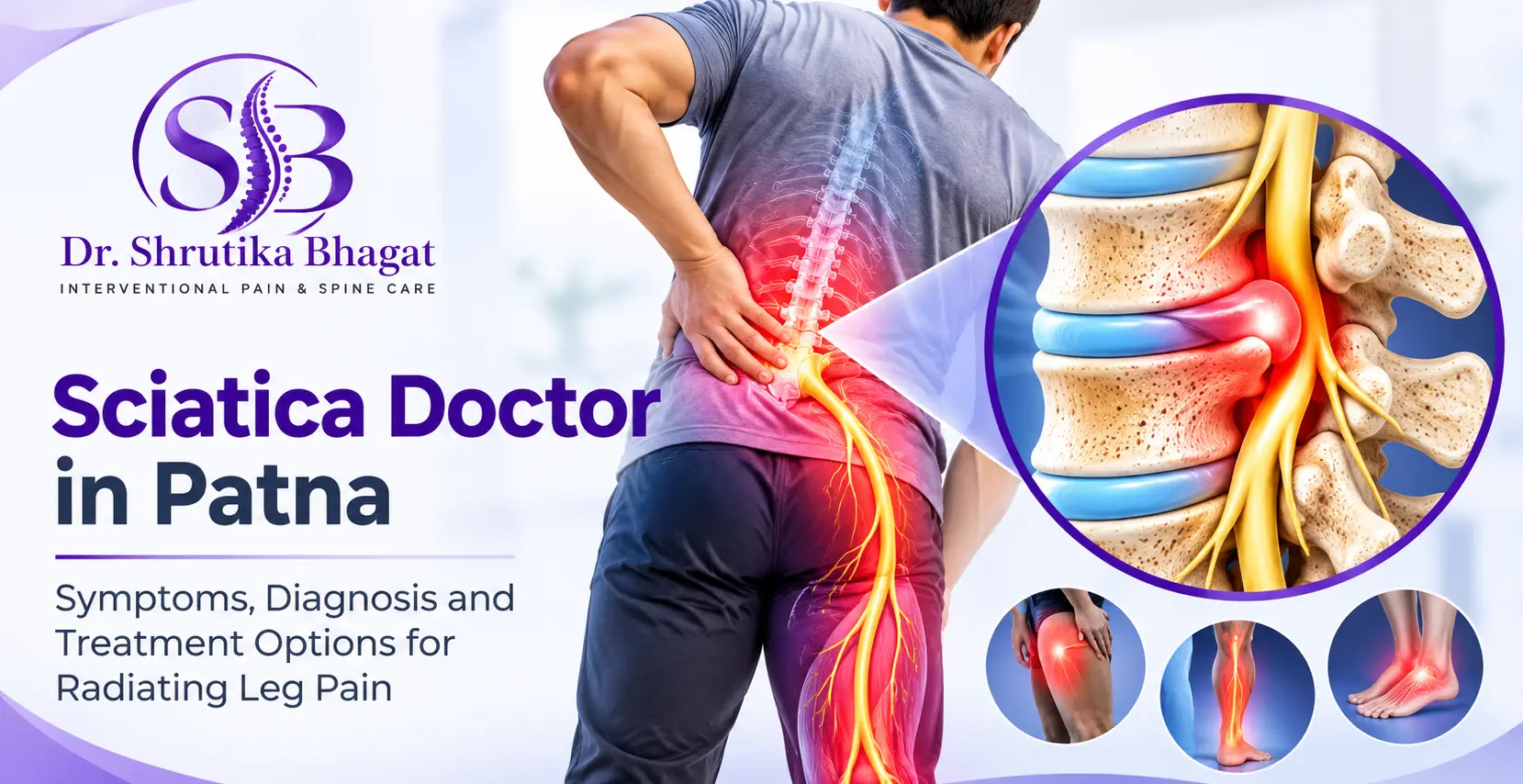
Sciatica is nerve-related pain that commonly travels from the lower back or buttock into one leg. It may feel sharp, burning, shooting, or electric and can sometimes be accompanied by tingling, numbness, or muscle weakness. A herniated lumbar disc is one possible cause, although other spinal conditions can also irritate the nerves.
If you are searching for a sciatica doctor in Patna, a clinical assessment can help identify the likely cause of your symptoms and guide treatment. Depending on the diagnosis and severity, treatment may include activity modification, physiotherapy, medication, selected image-guided pain procedures, or surgical assessment when necessary.
Dr. Shrutika Bhagat provides interventional pain and spine care in Patna. Learn more about the clinic's pain and spine care services.

What Is Sciatica?
Sciatica describes pain associated with irritation or compression of nerve roots that contribute to the sciatic nerve. The pain often travels from the lower back or buttock down the back or side of the leg and may extend below the knee into the foot.
Sciatica is a symptom pattern rather than a diagnosis of the underlying cause. Identifying the reason for nerve irritation is important when choosing appropriate treatment.
For related symptoms involving the lower back, read about back pain treatment in Patna.
Common Symptoms of Sciatica
Sciatica symptoms vary depending on the affected nerve and the underlying spinal condition. Common symptoms include:
- Shooting or burning pain from the lower back or buttock into the leg
- Pain that travels below the knee
- Tingling or pins-and-needles sensations
- Numbness in part of the leg or foot
- Muscle weakness in some cases
- Pain aggravated by certain movements, coughing, or straining
Not everyone experiences all these symptoms. A clinical examination helps determine whether a spinal nerve may be involved.
For information about other nerve-related pain conditions, see nerve pain treatment in Patna.
What Causes Sciatica?
Sciatica can occur when a spinal nerve root becomes irritated or compressed. Common causes include:
- Herniated disc: Disc material protrudes and may irritate a nearby nerve root.
- Spinal stenosis: Narrowing around spinal nerves may contribute to symptoms.
- Age-related spinal changes: Changes in discs and joints can sometimes reduce the space available for nerves.
- Other conditions: Certain spinal, hip, or nerve problems can produce similar symptoms.
A slip disc is one possible cause of sciatica, but not every disc herniation causes symptoms. Learn more about slip disc treatment in Patna.
How Is Sciatica Diagnosed?
Diagnosis usually begins with a medical history and physical examination. A clinician may assess pain distribution, muscle strength, sensation, reflexes, walking, and movements that reproduce symptoms.
An MRI may be considered when symptoms persist, significant neurological findings are present, warning signs need investigation, or imaging is likely to affect treatment planning. A scan should be interpreted alongside symptoms and examination findings rather than in isolation.
For general patient information about disc-related conditions, consult the NHS guide to slipped discs.
Sciatica Treatment Options in Patna
Treatment depends on the cause of nerve irritation, symptom severity, duration, functional limitations, and neurological findings. Many people improve with non-surgical care, while selected patients may require an interventional procedure or surgical assessment.
1. Activity Modification and Conservative Care
For many patients, gentle activity within tolerable limits is preferable to prolonged bed rest. Temporary adjustments to movements that aggravate symptoms may help, followed by a gradual return to normal activities as tolerated.
Advice should be individualised. Severe, persistent, or worsening symptoms warrant reassessment rather than relying solely on home care.
2. Physiotherapy and Rehabilitation
Physiotherapy may help improve mobility, strength, movement confidence, and everyday function. Exercises should be selected according to the person's symptoms and examination findings.
A qualified physiotherapist or treating clinician can recommend an appropriate exercise programme. Movements that consistently worsen radiating pain, numbness, or weakness should be reviewed.
3. Medication and Pain Management
Medication may be considered for symptom relief after reviewing the patient's medical history, other medicines, and potential risks. The choice depends on the clinical situation, and medicines should be used under professional guidance.
Explore the available pain management treatments in Patna for an overview of the clinic's services.
4. Image-Guided Injections
In selected cases, an image-guided injection may be considered when symptoms and examination suggest irritation of a particular spinal nerve. The decision depends on the diagnosis, symptom duration, previous treatment, potential benefits, and risks.
An injection is not necessary for every patient and may help manage symptoms without correcting every underlying structural problem. Read more about epidural steroid injections in Patna.
5. Other Image-Guided Pain Procedures
Some patients may need further assessment to determine the source of their pain and whether a targeted procedure is appropriate. The procedure selected should match the clinical diagnosis rather than being chosen solely because pain is present.
Learn about ultrasound-guided procedures in Patna for information about selected image-guided pain techniques.
6. Radiofrequency Procedures
Radiofrequency-based procedures may be used for selected pain conditions when the clinical assessment identifies a suitable target. They are not a routine treatment for every case of sciatica or disc herniation.
Read about radiofrequency ablation in Patna to understand the procedure and its potential applications.
7. Minimally Invasive Spine Endoscopy
When sciatica is associated with a suitable disc herniation, a minimally invasive spine procedure may be considered for selected patients. The decision depends on the location of the disc problem, the pattern of nerve compression, clinical findings, and response to non-surgical treatment.

Explore spine endoscopy in Patna to learn more about this treatment approach.
When Should You Consult a Sciatica Doctor in Patna?
Consider a clinical assessment if radiating leg pain persists, repeatedly returns, affects sleep or daily activities, or is accompanied by tingling or numbness. Assessment can help determine whether symptoms are consistent with sciatica and whether additional investigations are needed.
If you also experience neck pain or symptoms travelling into an arm, a clinician can assess whether a separate cervical or nerve-related problem may be involved. Learn more about neck pain treatment in Patna.
Warning Signs That Need Urgent Medical Attention
Seek emergency medical attention if you experience any of the following:
- New loss of bladder or bowel control
- Difficulty passing urine or new urinary retention
- Numbness around the groin, genitals, or saddle area
- Severe or rapidly progressing weakness in a leg
These symptoms may indicate serious nerve compression and should not wait for a routine appointment. Significant trauma, fever, or other concerning systemic symptoms alongside back pain also warrant prompt medical assessment.
For professional educational resources on pain medicine in India, visit the Indian Society for Study of Pain (ISSP).
Choosing a Sciatica Specialist
When choosing a sciatica doctor in Patna, look for a qualified clinician who takes a detailed history, performs an appropriate neurological examination, explains relevant imaging findings, and discusses the benefits and limitations of available treatment options.
Depending on the diagnosis, care may involve a spine specialist, an interventional pain physician, a physiotherapist, or a coordinated team. The appropriate pathway depends on the cause and severity of symptoms.
Sciatica Care with Dr. Shrutika Bhagat
Dr. Shrutika Bhagat provides interventional pain and spine care in Patna, with clinical interests including chronic pain management, image-guided procedures, and minimally invasive spine endoscopy.
Patients can review Dr. Shrutika Bhagat's professional background and use the clinic's contact page for appointment information. A clinical assessment is necessary to determine which treatment, if any, is appropriate.
Final Thoughts
Sciatica can have several causes, and treatment should be based on an appropriate clinical assessment. Many patients improve with conservative care, while selected cases may benefit from image-guided procedures or a spine specialist's assessment.
If you have persistent radiating leg pain, numbness, or weakness, consult a qualified healthcare professional to understand the possible cause and discuss appropriate treatment options.