

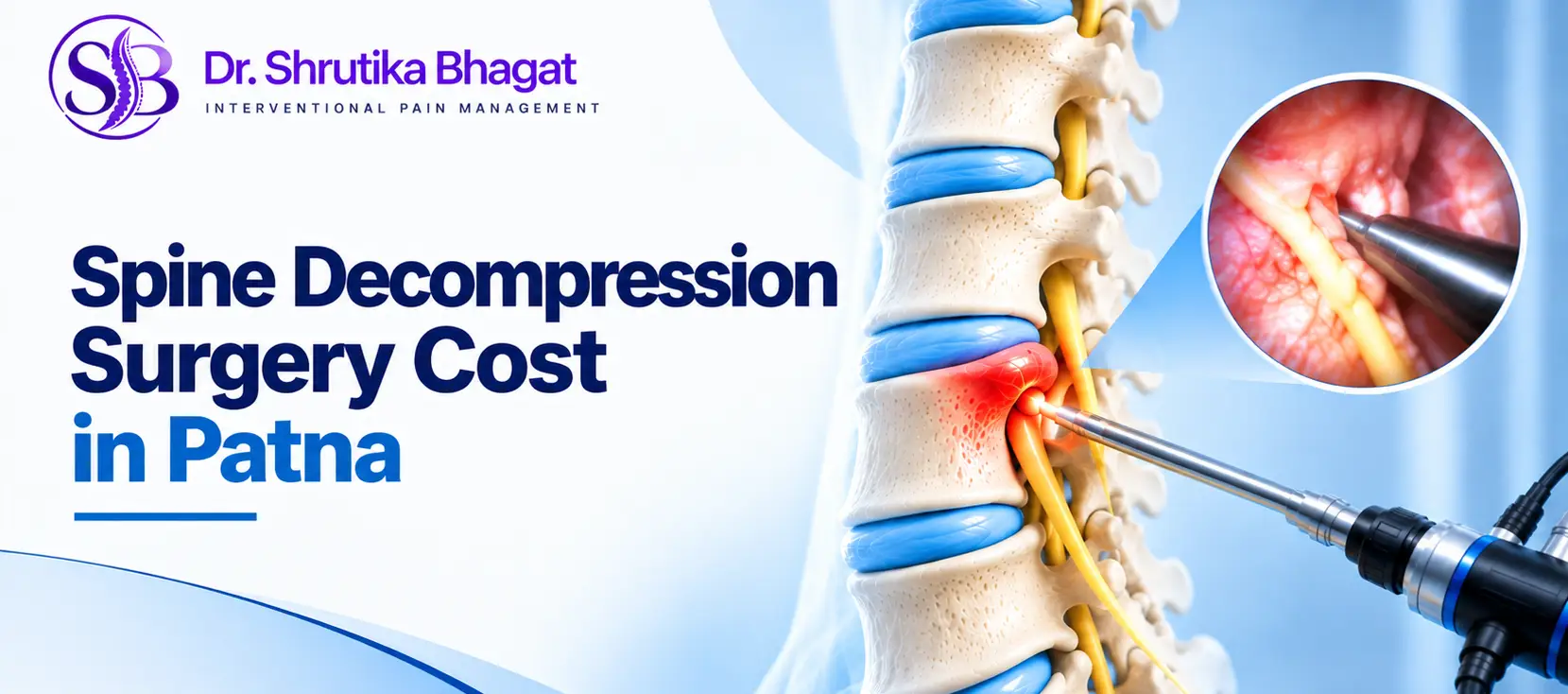
If you are searching for spine decompression surgery cost in Patna, it is important to know that the total treatment expense can vary from patient to patient. The cost depends on the underlying spinal condition, type of decompression procedure, diagnostic tests, hospital or procedure-facility charges, anesthesia, medicines and follow-up care.

What Is Spine Decompression Surgery?
Spine decompression is a procedure used to relieve pressure on a spinal nerve or other neural structures. Nerve compression may occur due to a herniated disc, spinal stenosis, bone changes or other structural problems affecting the spine.
Depending on the diagnosis, decompression may be performed using a minimally invasive or endoscopic technique, or through a conventional surgical approach. The choice depends on the location and cause of compression, symptoms, neurological findings and imaging results.
If you want to understand minimally invasive approaches in more detail, visit Spine Endoscopy in Patna .
How Much Does Spine Decompression Surgery Cost in Patna?
There is no single fixed spine decompression surgery cost in Patna that applies to every patient. A meaningful estimate can be provided only after evaluating the patient's condition and determining which procedure, if any, is appropriate.
The cost may differ depending on whether treatment involves a single-level disc problem, nerve compression, spinal stenosis or another condition. The required procedure, facility, investigations and postoperative care can also affect the overall expense.
For this reason, patients should avoid relying on a single advertised price without confirming exactly what is included in the treatment package.
Factors That Affect Spine Decompression Surgery Cost
1. Underlying Spine Condition
The diagnosis is an important factor in determining treatment requirements. A localized disc herniation may require a different approach from spinal stenosis or more complex nerve compression.
2. Type of Decompression Procedure
Different procedures have different equipment and facility requirements. Selected patients may be considered for endoscopic decompression or endoscopic discectomy, while others may require a conventional surgical approach.
3. Diagnostic Investigations
MRI scans and other investigations may be required to identify the location and severity of nerve compression. Existing reports can often be reviewed during consultation to determine whether further investigations are necessary.
4. Hospital or Procedure-Facility Charges
Facility-related expenses may include the procedure room, specialized equipment, monitoring and recovery facilities. These charges can vary according to the type of procedure and facility used.
5. Anesthesia or Sedation
Depending on the procedure, anesthesia or sedation and associated monitoring may form part of the overall treatment expense.
6. Medicines and Follow-Up
Medicines, wound care, postoperative reviews and other follow-up requirements may also contribute to the total cost of treatment.

Which Conditions May Need Spine Decompression?
Spine decompression may be considered when symptoms are caused by confirmed pressure on a spinal nerve or related neural structures. Some conditions that may be evaluated include:
- Herniated or prolapsed discs
- Sciatica caused by nerve compression
- Selected cases of spinal stenosis
- Foraminal narrowing with nerve compression
- Selected cervical disc-related nerve compression
- Persistent symptoms associated with structural spinal problems
If you are experiencing radiating pain from the lower back into the leg, read more about sciatica treatment in Patna .
Spine Decompression and Endoscopic Spine Treatment
Endoscopic spine treatment uses specialized equipment and a small access channel to visualize and treat selected spinal conditions. In appropriately selected patients, an endoscopic approach may be used for decompression or disc-related treatment.
Whether endoscopic treatment is suitable depends on factors such as the location of the disc or nerve compression, spinal anatomy, symptoms, neurological examination and MRI findings.
Does Every Patient With a Slipped Disc Need Decompression Surgery?
No. A slipped or herniated disc does not automatically mean that surgery is required. Depending on the severity and cause of symptoms, treatment may include medication, physical therapy, activity modification or image-guided pain procedures.
Surgery may be considered when symptoms remain persistent despite appropriate non-surgical treatment or when clinical and imaging findings indicate that decompression may be appropriate.
Explore other back pain treatment options in Patna to understand non-surgical and interventional approaches.
How Is the Right Spine Decompression Procedure Selected?
- Medical history: The duration, location and nature of symptoms are discussed.
- Neurological examination: Strength, sensation, reflexes and other relevant findings are assessed.
- Imaging review: MRI or other appropriate imaging is reviewed to identify the source of nerve compression.
- Diagnosis correlation: Imaging findings are compared with the patient's symptoms and examination.
- Treatment planning: Conservative care, interventional procedures and surgical options are discussed where appropriate.
- Cost discussion: Once the recommended treatment is established, the expected treatment-related expenses can be discussed more accurately.
What May Be Included in the Overall Treatment Cost?
Depending on the treatment plan, the overall expense may involve several components rather than only the procedure itself.
- Specialist consultation and evaluation
- Required imaging or laboratory investigations
- Procedure or operating-room charges
- Specialized endoscopic or surgical equipment
- Anesthesia or sedation, when required
- Medicines and postoperative care
- Follow-up consultations
The exact components depend on the individual treatment plan and facility arrangements.
Spine Decompression Surgery Cost vs. Non-Surgical Treatment
The cost of treatment should not be considered separately from the diagnosis and expected clinical need. Some patients may improve with non-surgical care, while others with persistent nerve compression may require a procedure.
Depending on the diagnosis, image-guided procedures such as epidural steroid injections or other pain-management treatments may be considered as part of a non-surgical treatment plan.
You can view the complete range of pain management treatments and procedures available for different pain conditions.
Why a Personalized Cost Estimate Is Important
A personalized estimate is more useful than a generic price because spine decompression procedures can differ considerably. The treatment requirements for a single-level disc problem may not be the same as those for multilevel spinal stenosis or another complex condition.
During consultation, the doctor can explain the diagnosis, available treatment options and factors that may contribute to the expected cost.
When Should You Consult a Spine Specialist?
Consider a specialist evaluation if back or neck pain persists, pain travels into an arm or leg, numbness or tingling develops, or symptoms interfere with normal daily activities.
Prompt medical assessment is particularly important when symptoms are accompanied by significant weakness, progressive neurological changes or new problems with bladder or bowel control.
What Should You Bring to Your Consultation?
If you are consulting a spine specialist about possible decompression surgery, bringing your previous medical records can help with treatment planning.
- Recent MRI, CT or X-ray reports and images
- Previous consultation records
- List of medicines currently being taken
- Previous physiotherapy or injection records
- Details of any previous spine surgery
- Relevant medical history
Trusted Pain Medicine Information in India
For additional professional information about pain medicine and interventional pain management in India, visit the Indian Society for Study of Pain (ISSP) .