

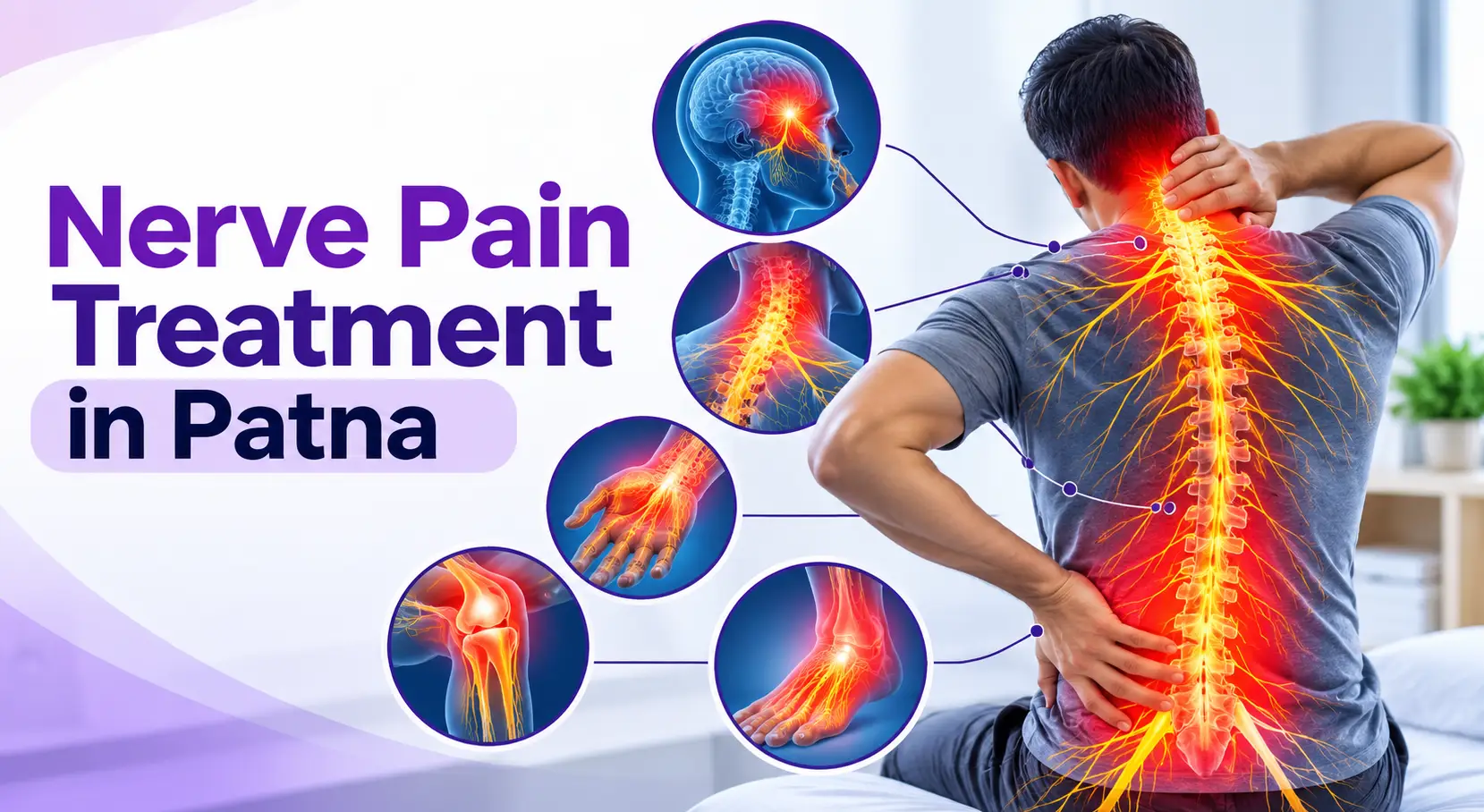
Nerve pain, also known as neuropathic pain, can cause burning, tingling, numbness, shooting pain or electric-shock-like sensations. It may affect the back, neck, face, arms, hands, legs or feet, depending on the nerves involved. Nerve pain can develop because of nerve compression, diabetes-related nerve damage, injury or certain neurological conditions.
If you are looking for a nerve pain specialist in Patna or a nerve pain doctor in Patna, understanding the underlying cause of your symptoms is an important first step. Dr. Shrutika Bhagat provides pain management consultation for selected chronic and nerve-related pain conditions. Learn more about nerve pain treatment in Patna.

What Is Nerve Pain?
Nerve pain occurs when the nervous system is damaged, irritated or affected by a medical condition. Neuropathic pain is specifically associated with a lesion or disease affecting the somatosensory nervous system. It can feel different from ordinary muscle or joint pain and may persist even when there is no obvious injury to the skin or surrounding tissue.
Some people experience burning or stabbing sensations, while others notice tingling, numbness, increased sensitivity to touch or pain travelling along a nerve pathway. Symptoms depend on which nerves are affected and the underlying cause.
When symptoms involve the spine, discomfort may travel from the back into an arm or leg. You can also explore information about back pain treatment in Patna and the assessment of persistent spinal symptoms.
Common Symptoms of Nerve Pain
Nerve pain symptoms vary depending on the location and severity of nerve involvement. Common symptoms include:
- Burning pain: A hot, burning or raw sensation in an affected area.
- Shooting pain: Sudden, sharp or electric-shock-like sensations.
- Tingling: Pins-and-needles sensations in the hands, feet or other areas.
- Numbness: Reduced or altered sensation.
- Touch sensitivity: Pain caused by light contact, clothing or bedding.
- Radiating pain: Discomfort travelling from the back or neck into an arm or leg.
- Muscle weakness: Difficulty moving a limb normally in some nerve conditions.
Persistent numbness, new weakness or worsening symptoms should be assessed by a healthcare professional. If pain travels from the lower back down the leg, read more about sciatica treatment in Patna.

What Causes Nerve Pain?
Several medical conditions can cause or contribute to nerve pain. Identifying the likely cause helps determine which treatment options may be appropriate.
1. Nerve Compression
A nerve may become compressed by surrounding tissues, spinal changes or repetitive pressure. Depending on the location, this can cause pain, tingling, numbness or weakness. Certain spinal conditions can irritate nerve roots and produce symptoms that extend into an arm or leg.
People experiencing neck-related symptoms can learn more about neck pain treatment in Patna.
2. Diabetes-Related Neuropathy
Diabetes can damage peripheral nerves over time. Symptoms often begin in the feet and legs and may include burning, tingling, reduced sensation or discomfort that becomes more noticeable at night. Appropriate diabetes management and regular medical follow-up are important for reducing the risk of further complications.
3. Nerve Injury
An injury, surgery or prolonged pressure on a nerve can sometimes lead to persistent pain or altered sensation. The type of injury, the nerves involved and the extent of damage influence recovery and treatment decisions.
4. Shingles and Post-Herpetic Neuralgia
Some people continue to experience burning pain, sensitivity or discomfort in an area affected by shingles after the rash has healed. This is known as post-herpetic neuralgia. Medical assessment can help distinguish it from other causes of nerve pain.
5. Other Medical Conditions
Vitamin deficiencies, certain medicines, infections and other neurological conditions may contribute to nerve symptoms. Not all tingling or numbness is caused by neuropathic pain, so an appropriate assessment is important.
How Is Nerve Pain Diagnosed?
Diagnosis usually begins with a medical history and physical examination. A clinician may ask about the location, duration and nature of the pain, associated numbness or weakness, previous injuries, existing medical conditions and current medicines.
Depending on the suspected cause, assessment may include:
- Examination of muscle strength, reflexes and sensation.
- Blood tests when diabetes, vitamin deficiency or another systemic condition is suspected.
- Nerve conduction studies or electromyography in selected cases.
- MRI or other imaging when nerve compression or a spinal condition is suspected.
- Additional investigations based on the clinical findings.
Not everyone needs every test. Investigations should be selected according to the symptoms, medical history and suspected diagnosis. Imaging results also need to be interpreted alongside the clinical examination.
Nerve Pain Treatment Options in Patna
Treatment depends on the underlying cause, severity of symptoms, nerves involved and the patient's overall health. A personalised plan may include treatment of the underlying condition, medication, rehabilitation or selected specialist procedures.
1. Treating the Underlying Cause
When nerve pain is associated with diabetes, vitamin deficiency, nerve compression or another identifiable condition, managing that problem is an important part of care. Treatment may help control symptoms and reduce further nerve injury, although recovery varies between individuals.
2. Medication for Neuropathic Pain
Some medicines used for nerve pain differ from those commonly used for routine muscle aches. Depending on the diagnosis, a clinician may consider medicines specifically used to manage neuropathic pain.
These medicines can have side effects and may require careful dose adjustment. Do not start, stop or change prescribed medication without medical guidance. For patient information, see the NHS guide to peripheral neuropathy treatment.
3. Physiotherapy and Activity Modification
When appropriate, physiotherapy and guided exercises can help maintain movement, strength and function. Recommendations depend on the underlying condition and the patient's physical ability. Avoid activities that significantly worsen symptoms and seek medical advice if weakness or loss of sensation progresses.
4. Image-Guided Procedures
For selected patients, a specialist may consider a targeted injection or nerve block to help assess or manage pain arising from a particular nerve or nerve pathway. Some procedures use ultrasound or fluoroscopic imaging to guide needle placement.
Learn more about ultrasound-guided procedures in Patna. The suitability of a procedure depends on the diagnosis, expected benefits, risks and available alternatives.
5. Radiofrequency Procedures
Radiofrequency procedures use controlled energy to modify the activity of selected nerves involved in certain pain conditions. They may be considered for carefully selected patients after clinical assessment. They are not suitable for every type of nerve pain.
Read more about radiofrequency ablation in Patna to understand this type of interventional pain procedure.
6. Treatment for Selected Spinal Nerve Conditions
When symptoms are associated with inflammation around spinal nerve roots, a specialist may consider an epidural injection in selected cases. This is not a general treatment for every neuropathic pain condition, and suitability depends on the diagnosis.
Explore epidural steroid injection treatment in Patna for more information about this procedure.
For some people with severe chronic pain that has not responded adequately to other treatments, spinal cord stimulation may be considered following specialist assessment. Learn more about spinal cord stimulation.
When Should You Consult a Nerve Pain Specialist in Patna?
Arrange a medical assessment if you experience persistent burning, tingling, numbness, shooting pain or symptoms that interfere with sleep, walking, work or everyday activities. Assessment can help identify treatable causes and determine whether specialist pain management or another type of care is appropriate.
Seek urgent medical care if you develop sudden or rapidly worsening weakness, new difficulty walking, numbness around the groin or genital area, or new problems controlling your bladder or bowel. These symptoms may indicate a serious neurological problem and should not be ignored.
Nerve Pain Doctor in Patna: Consultation with Dr. Shrutika Bhagat
Dr. Shrutika Bhagat is a Pain Medicine and Spine Endoscopy Specialist in Patna. A consultation can help assess persistent nerve-related pain, review relevant investigations and discuss possible management options based on the clinical findings.
The appropriate treatment depends on the suspected cause, examination findings, medical history and the patient's goals. Some conditions may require coordination with a neurologist, physician, orthopaedic specialist or another healthcare professional.
Learn more about Dr. Shrutika Bhagat and her clinical practice. For appointment enquiries, visit the clinic contact page.