
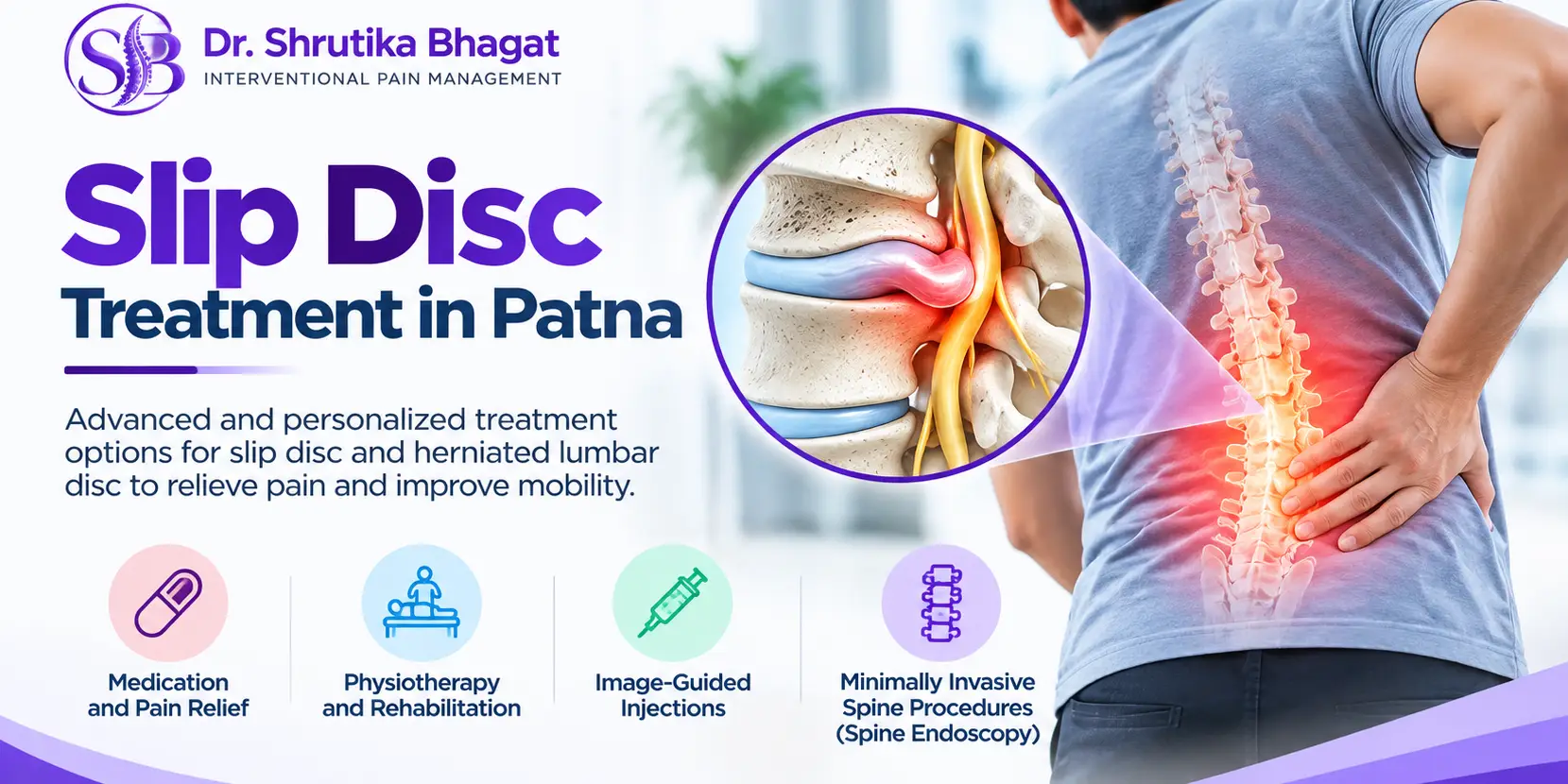
A slip disc, also known as a herniated or prolapsed disc, is a spinal condition in which disc material protrudes beyond its normal boundary. Depending on its location, it may cause back pain, neck pain, tingling, numbness, or pain radiating into an arm or leg. In some cases, it can irritate or compress a nearby spinal nerve.
Slip disc treatment in Patna depends on the location of the affected disc, the severity of symptoms, neurological findings, and the patient's overall health. Treatment may include activity modification, physiotherapy, medication, selected image-guided pain procedures, or surgery when clinically necessary. An appropriate clinical assessment helps determine which options are suitable.
This guide explains slip disc symptoms, diagnosis, non-surgical treatment options, minimally invasive procedures, and when to seek specialist care.

What Is a Slip Disc?
The spine consists of vertebrae separated by intervertebral discs. These discs help absorb loads and allow the spine to move. A disc contains a softer centre surrounded by a tougher outer layer. When disc material protrudes through a weakened area, it may irritate nearby nerves.
Not every disc bulge or herniation causes symptoms. Imaging findings must be interpreted alongside the patient's symptoms and physical examination. Treatment should address the clinical problem rather than the scan report alone.
People experiencing persistent lower back discomfort can also learn about back pain treatment in Patna.
Common Symptoms of a Slip Disc
Slip disc symptoms vary according to the affected spinal level and whether a nerve is irritated or compressed. Common symptoms include:
- Lower back or neck pain
- Pain spreading into the buttock, leg, shoulder, or arm
- Tingling or numbness in an arm or leg
- Muscle weakness in some cases
- Pain aggravated by certain movements, coughing, or straining
- Difficulty performing some everyday activities
Symptoms alone cannot confirm a slip disc. A medical assessment helps distinguish disc-related pain from other spinal, joint, or nerve conditions.
Lumbar Slip Disc
A lumbar slip disc affects the lower back and may irritate a nerve root that supplies the leg. This can produce pain that travels from the lower back or buttock down the leg. This pattern is commonly associated with sciatica treatment in Patna.
Cervical Slip Disc
A cervical slip disc affects the neck. It may cause neck pain, shoulder discomfort, pain travelling down an arm, tingling, or weakness. New or progressive weakness, difficulty walking, or symptoms suggesting spinal cord involvement require prompt medical evaluation.
What Causes a Slip Disc?
Disc herniation may develop because of age-related changes, repeated mechanical stress, or an injury. Possible contributing factors include:
- Age-related changes in disc structure
- Repetitive lifting or strenuous activity
- Awkward lifting or twisting movements
- Previous back or neck injuries
- Individual anatomical and lifestyle factors
A slip disc does not always result from a single injury. General spine-health measures, including regular appropriate physical activity and safe lifting practices, may support back health but cannot prevent every disc problem.
How Is a Slip Disc Diagnosed?
Diagnosis generally begins with a detailed medical history and physical examination. A clinician may assess spinal movement, pain distribution, sensation, muscle strength, reflexes, and signs of nerve irritation.
An MRI may be recommended when symptoms, examination findings, warning signs, or treatment planning make imaging necessary. Other tests may be considered when a different diagnosis needs to be investigated.
Not everyone with back pain requires immediate imaging. The need for a scan should be based on clinical findings and whether the result is likely to influence treatment decisions.
For additional professional information about pain medicine in India, consult the Indian Society for Study of Pain (ISSP).
Slip Disc Treatment Options in Patna
Many people with a symptomatic slip disc initially receive non-surgical treatment. The appropriate approach depends on the severity of symptoms, neurological findings, functional limitations, and response to previous care.
1. Activity Modification and Conservative Treatment
For many uncomplicated disc problems, gentle activity within tolerable limits is preferable to prolonged bed rest. A clinician may recommend temporarily modifying movements that aggravate symptoms and gradually returning to normal activities.
The treatment plan should be individualised. Severe or worsening symptoms should not be managed through self-care alone.
2. Physiotherapy and Exercise
Physiotherapy may help improve mobility, strength, movement confidence, and daily function. Exercises should be selected according to the patient's symptoms and examination findings.
A physiotherapist or treating clinician can advise which movements are appropriate and how to progress activity safely. Exercises that repeatedly worsen radiating pain, numbness, or weakness should be reviewed.
3. Medication and Interventional Pain Management
Medication may be considered for symptom relief after reviewing the patient's medical history, other medicines, and potential risks. Treatment should be prescribed by a qualified clinician, as some medicines are unsuitable for certain patients.
When pain persists, an assessment by an experienced pain physician may help identify appropriate options. Learn more about nerve pain treatment in Patna.
4. Image-Guided Injections
In selected cases, an image-guided injection may be considered when symptoms suggest irritation of a specific spinal nerve and conservative care has not provided sufficient improvement.
The choice of injection depends on the diagnosis, affected spinal level, examination findings, and potential risks. These procedures are not required for every slip disc and may provide symptom relief without correcting every structural disc problem.
Read more about epidural steroid injection in Patna to understand one option used in selected cases of radiating spinal pain.
5. Radiofrequency-Based Procedures
Radiofrequency procedures use controlled energy to target selected nerves or pain-generating structures. They are appropriate for specific indications and are not a routine treatment for every disc herniation.
A clinician must first determine whether the patient's pain pattern and diagnosis are suitable for this approach. For an overview, see radiofrequency ablation in Patna.
6. Minimally Invasive Spine Endoscopy
Spine endoscopy uses a specialised camera and instruments to treat selected spinal conditions through a small incision. For appropriately selected patients, an endoscopic procedure may be considered for certain disc herniations causing nerve compression.
Not every disc problem is suitable for endoscopy. Eligibility depends on the disc's location, the symptoms, imaging findings, and the patient's overall clinical condition.

Explore spine endoscopy in Patna for more information about this treatment approach.
7. When Is Surgery Considered?
Surgery may be considered when symptoms remain significantly disabling despite appropriate non-surgical treatment or when examination and imaging show nerve compression that requires surgical intervention.
Progressive neurological weakness or suspected serious nerve compression may require urgent assessment. A qualified spine surgeon can explain the possible benefits, risks, alternatives, and expected recovery associated with a recommended procedure.
Can a Slip Disc Be Treated Without Surgery?
Many patients improve with non-surgical care over time. Depending on the condition, this may include guided activity, physiotherapy, medication, and selected image-guided procedures.
However, conservative treatment is not suitable for every situation. Persistent or worsening neurological symptoms need reassessment, and some patients may benefit from surgery. No single treatment guarantees the same result for every patient.
When Should You Seek Urgent Medical Attention?
Seek emergency medical attention if back pain is accompanied by any of the following symptoms:
- New loss of bladder or bowel control
- Difficulty passing urine or new urinary retention
- Numbness around the groin, genitals, or saddle area
- Severe or rapidly progressing weakness in a leg or arm
These symptoms may indicate serious nerve compression and should not wait for a routine appointment. Fever, significant trauma, or other concerning systemic symptoms alongside back pain also warrant prompt assessment.
Choosing a Slip Disc Specialist in Patna
When choosing a clinician for slip disc treatment in Patna, look for someone who takes a detailed history, performs an appropriate neurological examination, explains imaging findings, and discusses treatment options without making unrealistic promises.
Depending on the diagnosis, care may involve a spine specialist, an interventional pain physician, a physiotherapist, or a coordinated team. The appropriate clinician depends on the symptoms and whether significant nerve compression is present.
Spine and Pain Care with Dr. Shrutika Bhagat
Dr. Shrutika Bhagat provides interventional pain and spine care in Patna, with clinical interests including image-guided pain procedures and minimally invasive spine endoscopy.
Patients can review Dr. Shrutika Bhagat's professional background and explore the clinic's pain management treatment options. A personal clinical assessment is necessary to determine which procedure, if any, is appropriate.
Final Thoughts
Slip disc treatment depends on the affected spinal level, symptoms, and whether nerves are compressed. Many patients can begin with conservative care, while selected patients may benefit from image-guided pain procedures or minimally invasive spine surgery. Others may require surgical assessment based on their clinical findings.
If you have persistent back pain, radiating limb pain, numbness, or weakness, seek an appropriate clinical assessment to understand the cause and discuss suitable options.
For clinic details and appointments, visit the contact page.