
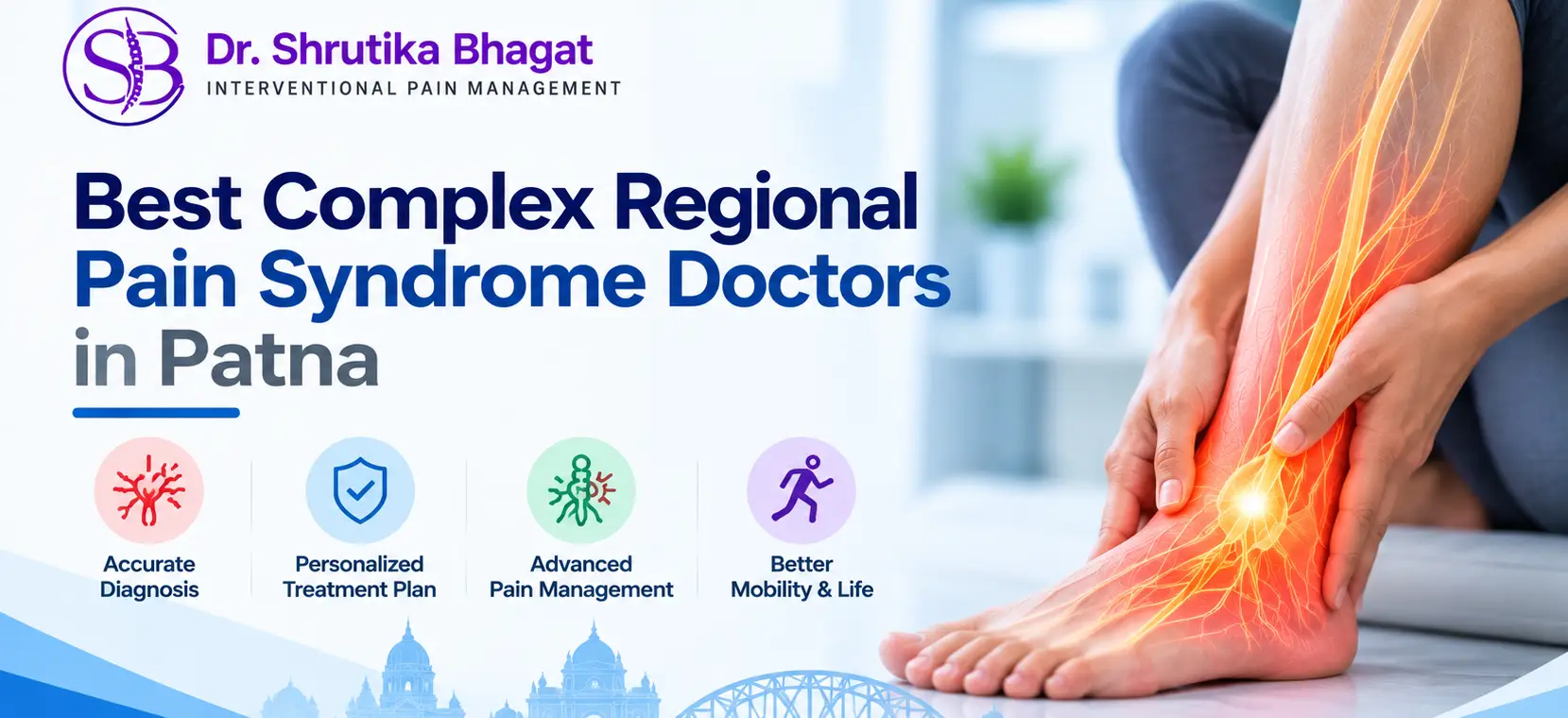
Complex Regional Pain Syndrome (CRPS), historically also called Reflex Sympathetic Dystrophy (RSD) in some cases, is a chronic pain condition that can develop after an injury, surgery, fracture, or other event affecting a limb. The pain may be accompanied by changes in skin temperature, colour, sweating, swelling, and movement.
Because CRPS can involve both pain and changes in limb function, timely assessment is important. CRPS treatment in Patna may involve rehabilitation, medicines, targeted nerve blocks, image-guided procedures, and neuromodulation depending on the individual's symptoms, diagnosis, and response to treatment.
This guide explains CRPS and RSD, common symptoms, diagnosis, treatment approaches, and when to consult an interventional pain physician in Patna.

What Is Complex Regional Pain Syndrome (CRPS)?
Complex Regional Pain Syndrome is a chronic pain condition that usually affects an arm, hand, leg, or foot. Pain may be more severe or persistent than would normally be expected from the original injury or procedure.
CRPS can affect sensory, motor, and autonomic functions of the affected limb. Some people develop increased sensitivity to touch, temperature changes, swelling, sweating abnormalities, or difficulty moving the limb.
CRPS is not diagnosed based on pain alone. A clinician generally considers the history, physical examination, symptoms, and other possible causes of the pain before making a diagnosis.
What Is RSD?
RSD, or Reflex Sympathetic Dystrophy, is an older term that has historically been used for what is now generally classified under Complex Regional Pain Syndrome type I (CRPS-I).
The terminology can sometimes be confusing because CRPS is classified into different types depending on whether there is evidence of a definable nerve injury. A pain specialist can assess the clinical history and determine which diagnostic considerations apply.
Common Symptoms of CRPS
Symptoms can vary from one person to another and may change over time. Common features can include:
- Persistent or burning pain in an affected limb
- Increased sensitivity to touch or pressure
- Pain from normally non-painful stimuli
- Swelling of the affected area
- Changes in skin colour or temperature
- Changes in sweating
- Stiffness or reduced range of movement
- Difficulty using the affected limb normally
- Changes in skin or nail appearance in some cases
These symptoms can also occur in other medical conditions. Therefore, persistent limb pain or unusual sensory and circulation-related changes should be medically evaluated rather than assumed to be CRPS.
What Causes CRPS?
CRPS can develop after different types of physical events. Possible triggers include:
- Fractures or other injuries
- Surgery
- Soft-tissue injuries
- Nerve-related injuries
- Immobilisation of a limb
- Other painful medical events
However, not everyone who experiences an injury or surgery develops CRPS. The underlying mechanisms are complex and may involve changes in the peripheral and central nervous systems, inflammatory responses, and autonomic function.
How Is CRPS Diagnosed?
There is no single blood test or imaging scan that independently confirms CRPS. Diagnosis is primarily clinical and involves evaluating the patient's history and physical findings while considering other possible explanations for the symptoms.
Clinicians may assess sensory, vasomotor, sudomotor or oedema-related, and motor or trophic features. The Budapest diagnostic criteria are commonly used as a structured clinical framework for evaluating suspected CRPS.
Additional investigations may sometimes be recommended to rule out other conditions or investigate a specific symptom. These can include imaging, nerve studies, blood tests, or other investigations when clinically appropriate.
For professional educational resources related to pain medicine in India, patients and healthcare professionals can refer to the Indian Society for Study of Pain (ISSP).
CRPS / RSD Treatment in Patna
CRPS treatment in Patna is usually individualised according to the symptoms, duration of the condition, functional limitations, previous treatments, and clinical findings. Treatment may involve more than one approach rather than relying on a single procedure.
1. Rehabilitation and Graded Movement
Maintaining or gradually restoring movement and function can be an important component of CRPS management. Depending on the patient's condition, rehabilitation may focus on mobility, desensitisation, strengthening, and improving the practical use of the affected limb.
Rehabilitation should be appropriately planned because pain and sensitivity can make movement difficult. A pain physician may coordinate with physiotherapy or rehabilitation professionals as part of a multidisciplinary treatment plan.
2. Medicines for Pain Management
Depending on the clinical presentation, medicines may be considered to address neuropathic pain, inflammation, sleep disturbance, or other associated symptoms. The choice of medication depends on the patient's medical history, other medicines, potential side effects, and treatment goals.
Medication should be prescribed and monitored by a qualified healthcare professional rather than started or stopped without medical advice.
3. Sympathetic Nerve Blocks
In selected patients, targeted sympathetic nerve blocks may be considered as part of a broader CRPS treatment plan. The procedure depends on the affected region. For example, a stellate ganglion block may be considered for certain upper-limb conditions, while a lumbar sympathetic block may be considered for selected lower-limb presentations.
These procedures are generally performed with appropriate image guidance and clinical assessment. The potential benefits, limitations, and risks should be discussed before treatment.
4. Radiofrequency-Based Pain Procedures
In carefully selected cases, radiofrequency-based procedures may be considered for particular pain generators or nerve-related pain. The exact technique depends on the diagnosis and the anatomical structures involved.
Learn more about radiofrequency ablation in Patna and how interventional pain procedures may be incorporated into an individualised treatment plan.
5. Neuromodulation and Spinal Cord Stimulation
For selected patients with persistent pain despite appropriate conservative and interventional management, neuromodulation may be considered. Spinal cord stimulation (SCS) is one neuromodulation approach that may be used for certain chronic neuropathic pain conditions, including selected cases of CRPS.
Suitability for neuromodulation depends on factors such as diagnosis, symptom pattern, previous treatment, functional impact, and overall clinical assessment. It is not appropriate for every patient.

Read more about spinal cord stimulation in Patna and its role in the management of selected chronic pain conditions.
Why Early Assessment Matters in CRPS
Persistent pain following an injury, fracture, or surgery should not automatically be labelled as CRPS. At the same time, unusual pain accompanied by swelling, sensitivity, temperature or colour changes, or difficulty moving a limb deserves appropriate medical assessment.
Early evaluation can help identify possible causes of symptoms, exclude other conditions, and establish an appropriate treatment and rehabilitation plan.
If your symptoms are primarily related to nerve pain, you can also learn more about nerve pain treatment in Patna.
CRPS Treatment Requires an Individualised Approach
There is no single treatment that is appropriate for every person with CRPS. Management may need to address pain, movement, sensitivity, sleep, psychological impact, and everyday function.
Depending on the clinical situation, a treatment plan may include:
- Clinical evaluation and diagnostic assessment
- Physiotherapy and graded functional rehabilitation
- Appropriate pain medicines
- Desensitisation strategies
- Sympathetic nerve blocks in selected cases
- Image-guided interventional pain procedures
- Neuromodulation for appropriately selected patients
- Ongoing assessment of pain and functional improvement
You can explore the broader range of pain management treatments in Patna offered through an interventional pain care approach.
When Should You Consult a CRPS Specialist in Patna?
Consider seeking medical evaluation if you have persistent limb pain after an injury, surgery, or fracture, particularly when the pain is accompanied by symptoms such as:
- Burning or disproportionate pain
- Extreme sensitivity to touch
- Persistent swelling
- Changes in skin temperature or colour
- Unusual sweating changes
- Stiffness or difficulty moving the limb
- Persistent nerve-like pain that interferes with daily activities
A specialist assessment can help determine whether the symptoms are consistent with CRPS or whether another condition may better explain them.
CRPS / RSD Pain Management in Patna
Dr. Shrutika Bhagat provides interventional pain and spine care in Patna, with clinical interests including chronic pain, neuropathic pain, image-guided procedures, radiofrequency-based interventions, and minimally invasive spine procedures.
Her approach to chronic pain focuses on clinical assessment and selecting appropriate treatment options according to the patient's condition rather than using the same procedure for every patient.
Learn more about Dr. Shrutika Bhagat, her clinical background, and her approach to pain and spine care.
Final Thoughts
CRPS and RSD can be complex conditions requiring careful diagnosis and an individualised treatment strategy. Management may involve rehabilitation, medicines, targeted nerve blocks, interventional pain procedures, and neuromodulation depending on the patient's symptoms and treatment response.
If you are experiencing persistent or unusual limb pain after an injury or procedure, an appropriate clinical evaluation can help determine the possible cause and guide the next steps.
For appointments and clinic information, visit the contact page of Dr. Shrutika Bhagat's Spine & Pain Clinic in Patna.